
Daniel's notes on Game Thinking
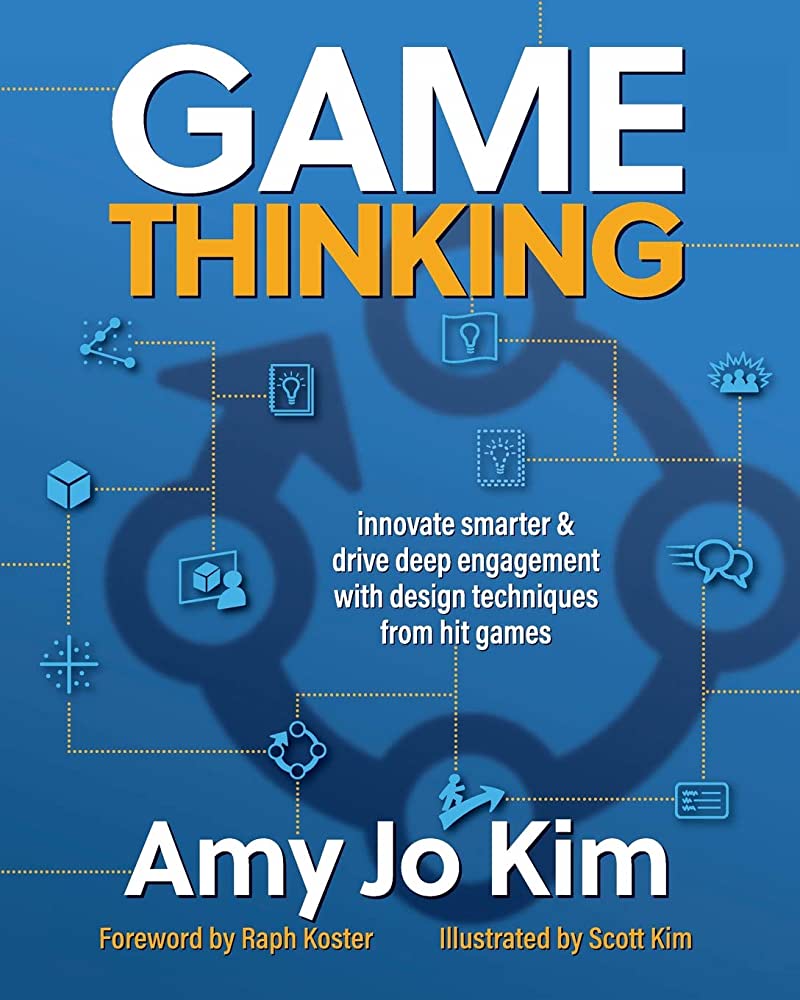
Game Thinking by Amy Jo Kim and Raph Koster
187 notes
first 25, in reading orderWe know from self-determination theory that competence and mastery are deeply, intrinsically rewarding. We also know that mastery doesn't come easy. It takes effort and self-transformation. That's what gives it meaning and satisfaction.
Games can tap into our desire to feel ourselves getting better at something. They give us an alternate, simplified reality—a micro-world—where we can immerse ourselves, learn the boundaries, master the rules, and visibly improve our skills.
A good game has the power to make us feel smart and competent, even when our world is falling apart. In contrast to the ups and downs of real life, the right game can reliably reward us for focused effort.
Mastery Is Better than Progress Numbers alone don't confer meaning. To create a compelling mastery system, you need context, challenge, and character transformation.
World of Warcraft is compelling because of the story you tell yourself and the skills and relationships you develop, and because you gain new powers and take on new roles and challenges.
They develop their talents, master an activity, and max out their learning opportunities. In gaming terms, they're level-capped. That's where an elder game comes in. It offers a new type of earned challenge or activity that wasn't available at lower levels.
At our idealized summer camp, the elder game is to help run the camp, either as a staffer or volunteer. Enthusiastic campers get the opportunity to level-up and become counselors or teachers at their beloved camp.
Create Roles that Leverage Earned Skills and Knowledge More than anything, experts want to show off their hard-won skills and knowledge.
Write a Compelling Mastery Story Imagine what types of experiences your most talented, dedicated customers might want. Some people want impact on the community; others care more about rewards, status, access, or an entirely new role to play.
Mastery story: WHEN I make the effort to master the system I WANT TO earn powers, access, privileges, and rewards SO I CAN stay engaged, challenged, and have an impact.
What would motivate my best customers to stick around? Once you connect with superfans, you'll funnel these insights into refining your hypothesis and building out your mastery systems.
Start with Customer Insights List the most relevant job and habit stories from your customer research.
Take the time to find and learn from true early adopters. Make sure you're testing your product's value proposition with the right people. If your outreach channel isn't working, fix the problem and try again.
that app was a leaky bucket; hardly anyone stayed around after downloading and trying it out. The developers did a great job with discovery and onboarding--but didn't invest in developing the habit-building phase of the experience.
You might be thinking "Hey wait. Why should I invest in building an entire loop? Isn't the best MVP a fake landing page?" Not always. A…
A habit loop, is an operant conditioning loop built around cues, routines, and rewards. Although it looks like a tempting solution, operant…
So what’s a Learning Loop? Is It a Landing Page? Not really. Is It a Habit Loop? Not quite. Skill-Building drives reengagement
162 more notes from Game Thinking
Daniel kept 187 notes on this book, each one pinned to the page it came from.
Read the rest in the app
Keep what you read, not just what you finished.
Booksense times your sessions and pins every note to the page it came from, so a paragraph from page 174 is still yours a year later. Free on iOS.