Daniel p. 1
Life is a game. Everyone alive is playing a game whose hidden rules are built into us and that silently directs our thoughts, beliefs and actions. This game is inside us. It is us. We can't help but play.
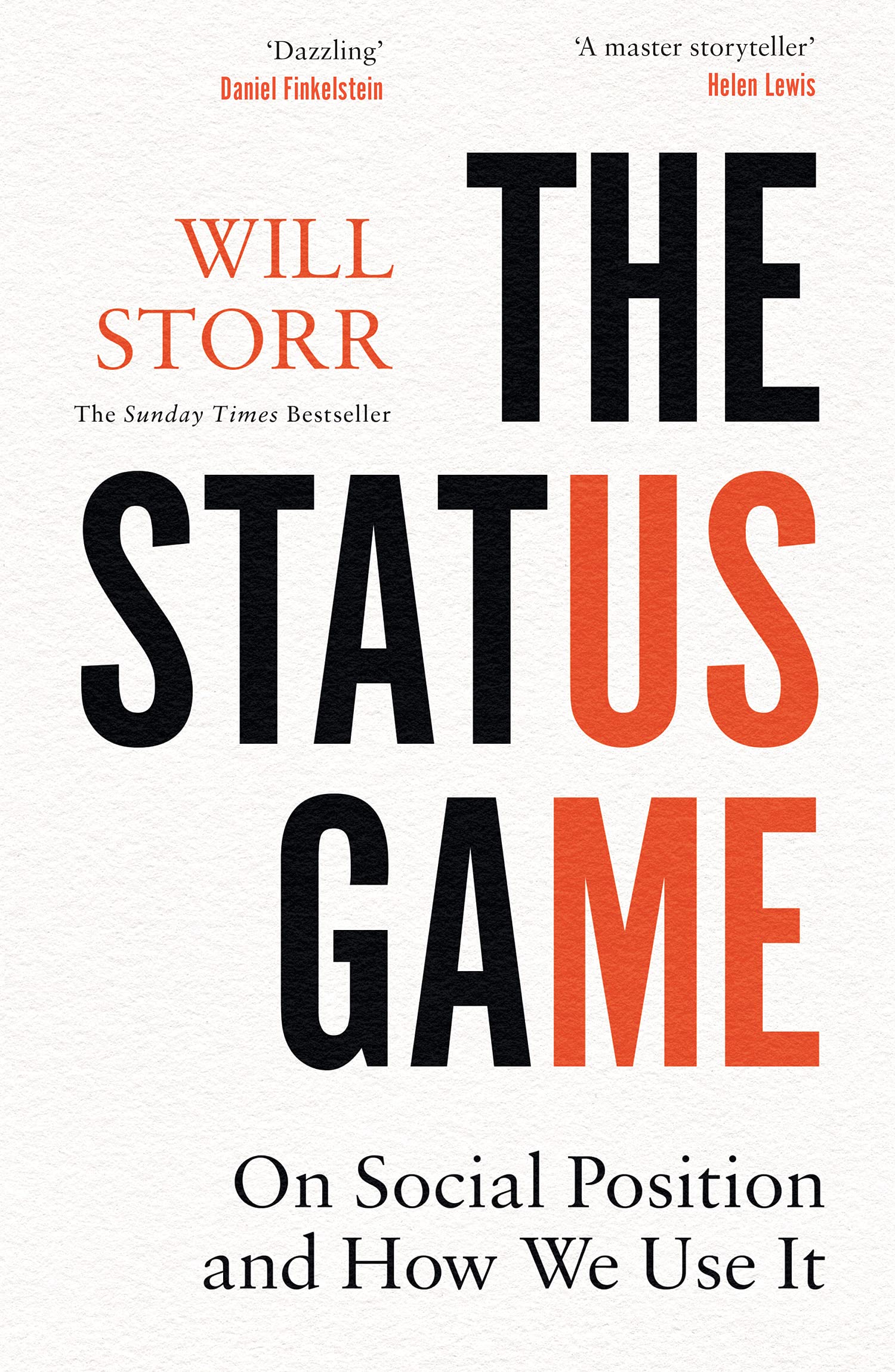
The Status Game by Will Storr
Life is a game. Everyone alive is playing a game whose hidden rules are built into us and that silently directs our thoughts, beliefs and actions. This game is inside us. It is us. We can't help but play.
Like all living organisms, humans are driven to survive and reproduce.
As a tribal species, our personal survival has always depended on our being accepted into a supportive community. We've developed powerful emotions that compel us to connect with others: the joy of acceptance and agony of rejection.
No matter where you might travel you'll find it: humans forming groups and playing for status.
This inbuilt need to achieve and maintain status gives us a thirst for rank and a fear of its loss that deforms our thinking and denies us the possibility of reliable happiness.
As psychologist Professor Brian Boyd writes, we 'naturally pursue status with ferocity: we all relentlessly, if unconsciously, try to raise our own standing by impressing peers, and naturally if unconsciously, evaluate others in terms of their standing.
Our brains continually, and in countless ways, measure where we sit versus other people. They automatically layer them and the groups they belong to into hierarchies. Most of these processes are subconscious, and hidden from us.
Our awareness of our desire for status eats itself but we readily recognise it in rivals and even use it as a method of insult—which, ironically, is status play: an attempt to downgrade others and thereby raise ourselves up.
Status isn't about being liked or accepted: these are separate needs, associated with connection. When people defer to us, offer respect, admiration or praise, or allow us to influence them in some way, that's status.
The higher we rise, the more likely we are to live, love and procreate. It's the essence of human thriving. It's the status game.
Disconnection is a fearsome state for a social animal to find itself in. It's a warning that its life is failing and its world has become hostile: where there's no connection, there's no protection. Isolation damages us so profoundly it can change who we are.
When our lives begin to fail, then, our minds and bodies fail too: we can become sick, angry, antisocial and increasingly isolated. We are, writes Cacioppo, 'creatures shaped by evolution to feel safe in company and endangered when unwillingly alone.’
when we're not doing well in the game of life, our bodies prepare for crisis by switching our settings so we're readied for attack.
Being beaten down in the rat race naturally changes what you expect from tomorrow, and that does seem to filter down into the way your cells prepare for tomorrow.
feeling deprived of status is a major source of anxiety and depression. perceiving oneself as having low rank compared to others is…
Suicide 'concentrates among those who experience an increase in their social inferiority' and occurs mostly 'when people fall below…
Those who decide to end their lives, finally quitting the game that's caused such agony, might have experienced a recent financial loss, or…
Daniel kept 194 notes on this book, each one pinned to the page it came from.
Read the rest in the appBooksense times your sessions and pins every note to the page it came from, so a paragraph from page 174 is still yours a year later. Free on iOS.