
Julia's notes on Atomic Habits
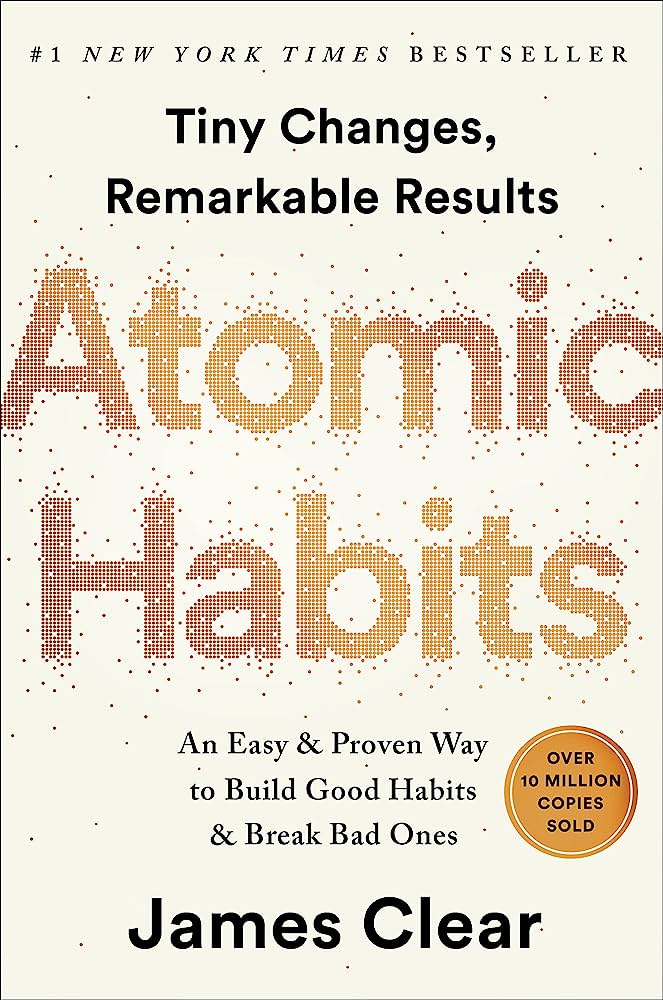
Atomic Habits by James Clear
48 notes
first 25, in reading orderP.9 four-step model of habits - cue, craving, response and reward.
P. 44 A habit is a behaviour that has been repeated enough times to become automatic, like putting on house clothes when coming back from work
P. 72 Give your habits a time and a space. I will [behavior] at [time] in [location] - implementation Intention strategy
P.74 Habit stacking identify a current habit you already do each day and then stack your new behaviour on top.
P.75 Each habit is acting as a cue for the next - positive version of Diderot Effect
P.79 Strategies like implementation intentions and habit stacking are to create obvious cues for your habits and design a clear plan when and where to take action.
P. 84 Design your environment to create a new habit - we are more likely to notice cues that stand out.
P.90 It is easier to build new habits in a new environment because you are not fighting against old cues. Whenever possible, avoid mixing the context of one habit with another. It can be difficult to go to bed early, if you watch TV in your bedroom.
P.91 Habits are dopamine-driven feedback loop. When dopamine rises, so does our motivation to act.
P.111 Temptation bundling for making your habits attractive. Pair an action you want with an action you need to do.
P. 116 as a general rule, the closer we are to someone, the more likely we are to imitate some of their habits. P. 117 Join a culture where your desired behaviour is the normal behaviour.
P.129 A craving is the sense that something is missing. It is the desire to change your internal state. The specific craving you feel and habits you perform are really an attempt to address your fundamental underlaying motives.
P.130 It is emotion that allows you to mark things as good, bad or different. You can make hard habits more attractive if you can learn to associate them with a positive experience.
P.134 Create a Motivation ritual by doing something you enjoy before a difficult habit.
Reframe your mind-set. Highlight the benefits of avoiding your bad habits.
P. 142 Motion and Action: when you are in motion, you are planning and strategising and learning. Action will deliver an outcome.
P. 142 Often we do motion because it allows us to feel like we are making progress without running the risk of failure.
P.143 When preparation becomes a form of procrastination, you need to change something. You do not want to merely be planning. You want to…
23 more notes from Atomic Habits
Julia kept 48 notes on this book, each one pinned to the page it came from.
Read the rest in the app

Keep what you read, not just what you finished.
Booksense times your sessions and pins every note to the page it came from, so a paragraph from page 174 is still yours a year later. Free on iOS.